%20FULL%20COLOUR%20-%20BLUE.svg)
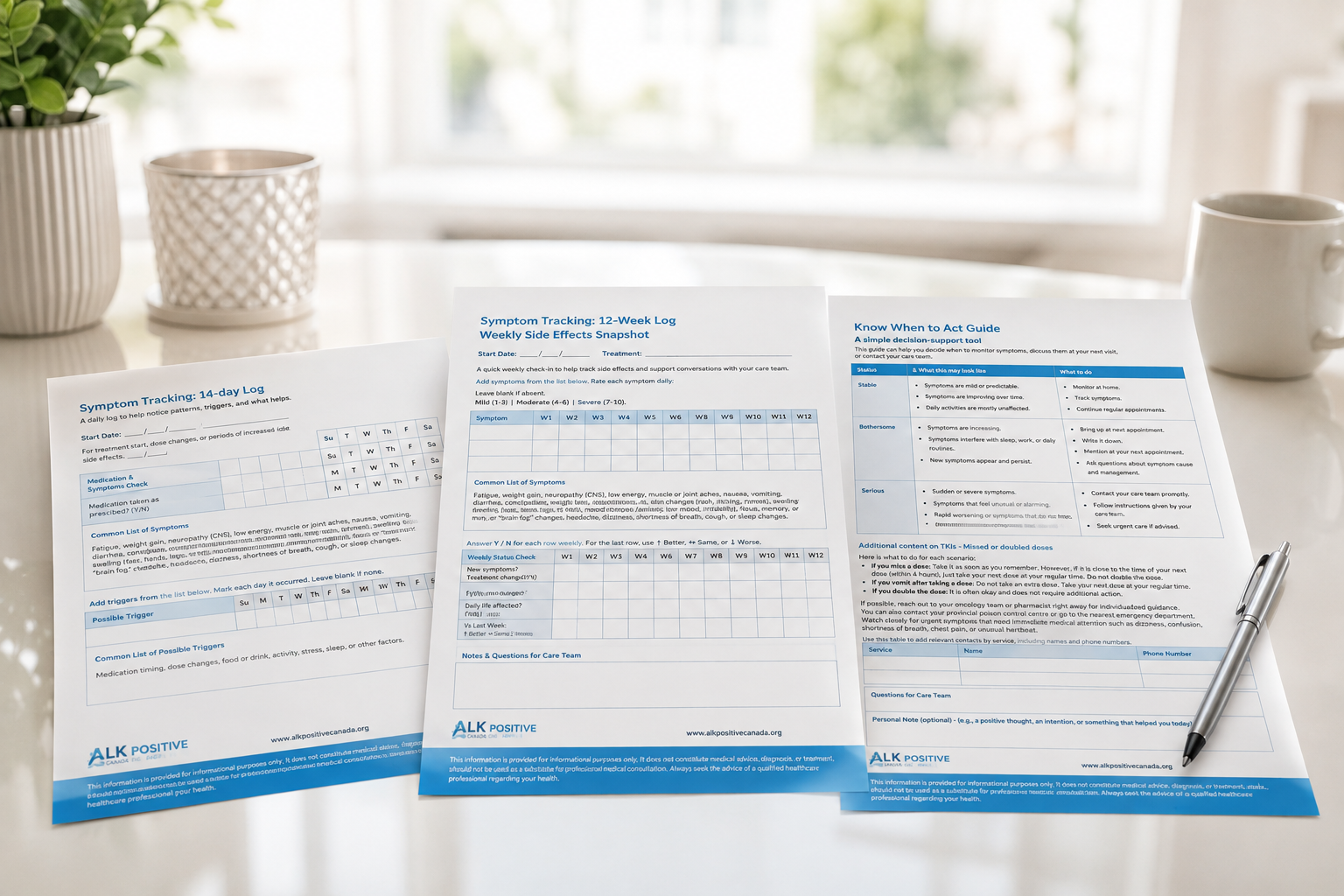
Symptom Trackers for ALK-Positive Lung Cancer
Tracking your symptoms consistently can help you and your healthcare team spot patterns, adjust treatment, and protect your quality of life.
On this page, you’ll find printable symptom trackers designed for people receiving ALK-targeted therapies (tyrosine kinase inhibitors, or TKIs). These tools are intended to support more informed conversations with your oncology team and help you feel more prepared and organized between appointments.
These resources were developed by ALK Positive Canada with clinical input from a medical oncologist.
What these symptom trackers are for
Our symptom trackers give you a structured way to record how you’re feeling over time, including both common side effects and changes in your daily life.
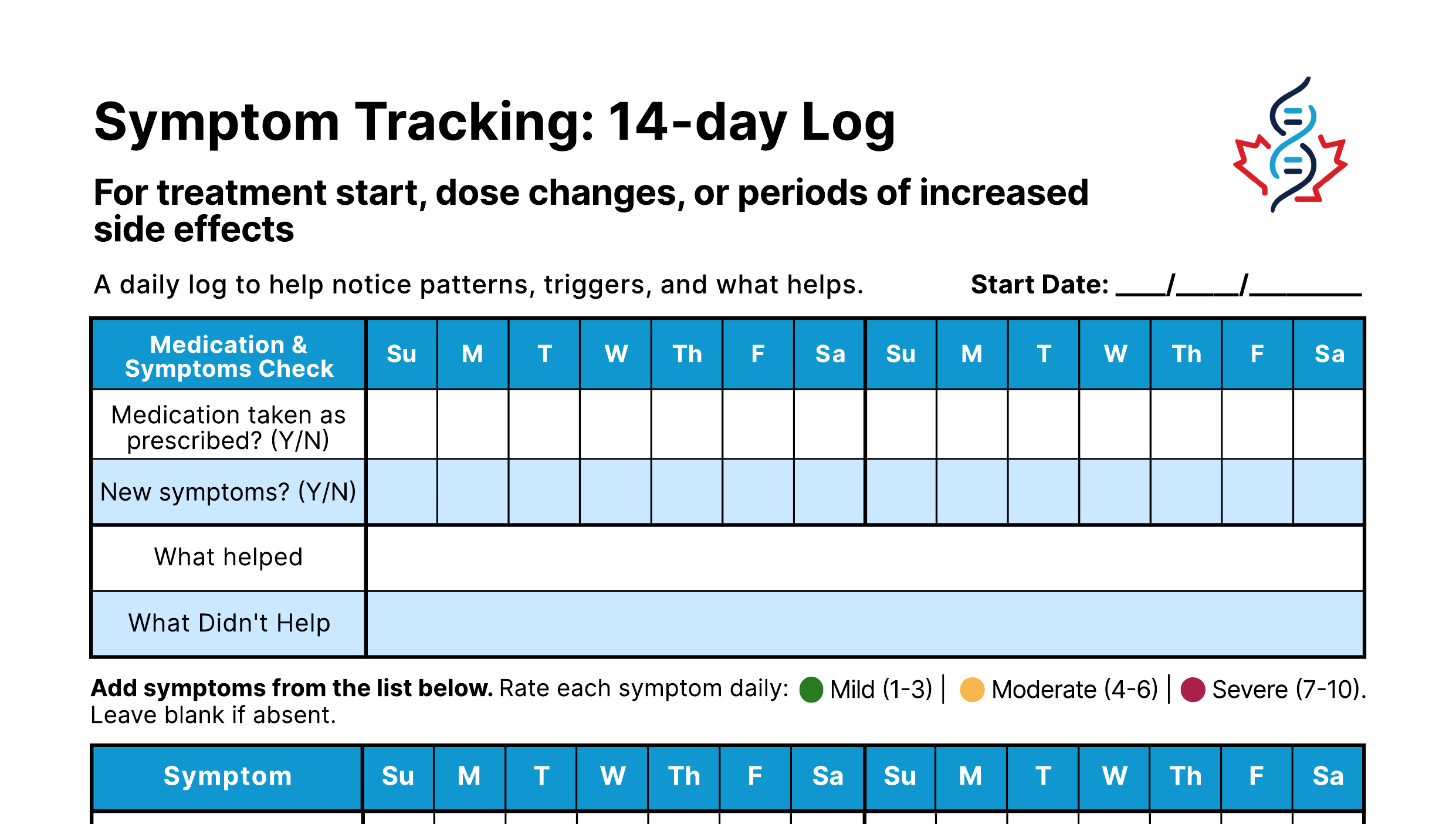
14-day symptom tracking log
Designed for the start of a new treatment, a dose change, or a period when side effects feel more intense. It helps you record symptoms day-by-day, note possible triggers (like medication timing, food, activity, or stress), and track what helps and what doesn’t.
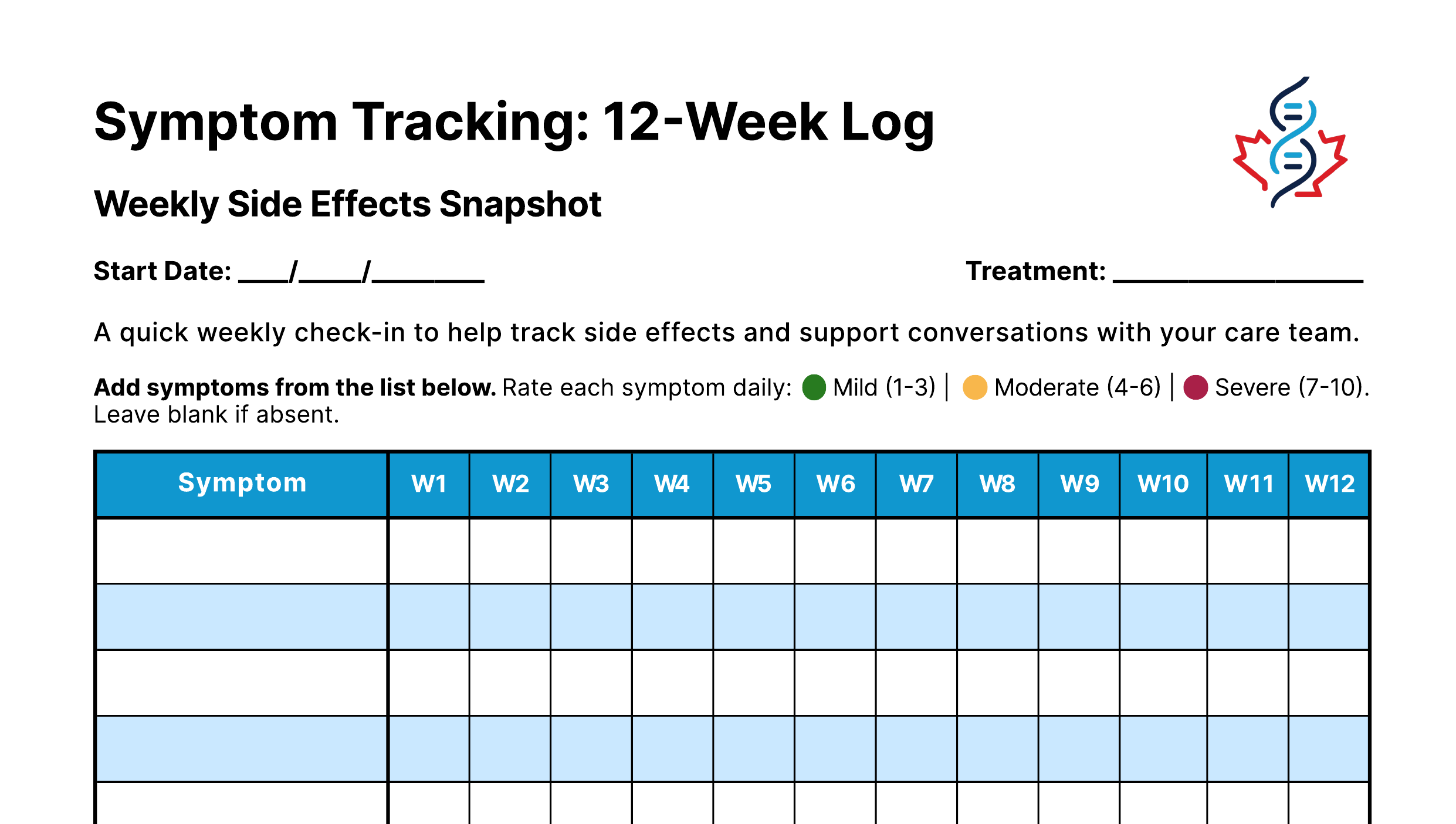
12-week symptom tracking log
A quick weekly snapshot that lets you check in on side effects, treatment changes, and whether your symptoms are getting better, staying the same, or getting worse over time. This longer-range view can highlight trends that may be harder to remember at the moment.
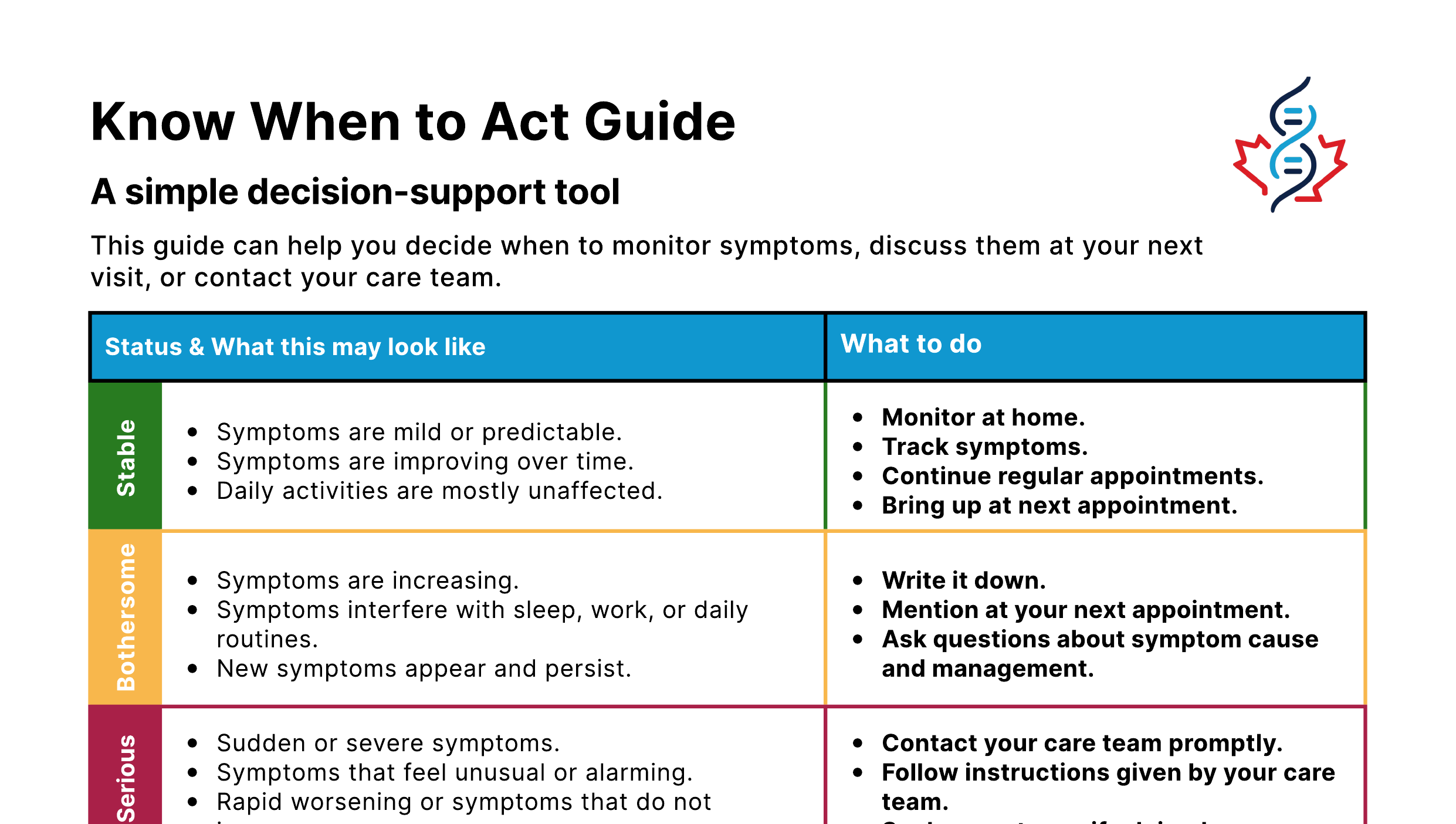
Guide: Know when to act
A practical reference to help you recognize when a symptom can be monitored, discussed at your next appointment, or requires prompt contact with your healthcare team.
Guide: Questions to ask your oncologist
Here is a practical guide to help you prepare for conversations with your oncology team. It walks through key questions about side effects, priorities, and support, so you can share what matters most, stay involved in your treatment decisions, and revisit your goals as your care evolves.
How to use the symptom trackers
You can download and print the PDFs to use at home or bring to appointments. You may find it helpful to keep your completed trackers in a binder or folder alongside other important medical information, such as scan reports, blood work, or medication lists.
Here are some simple steps to get started:
1. Choose the log that fits your situation
Use the 14-day log when starting a new treatment, changing dose, or noticing new or increased side effects. Use the 12-week log for ongoing, week-to-week monitoring once your treatment feels more stable.
2. Add your symptoms from the list provided
Both trackers include common symptoms seen with ALK-targeted therapies, such as fatigue, digestive symptoms, mood or cognitive changes, and skin or swelling changes. You can also write in additional symptoms that matter to you.
3. Fill in the tracker regularly
On the 14-day log, rate your symptoms each day and mark any triggers you notice, such as dose timing, certain foods, activity, or sleep. On the 12-week log, complete a brief weekly check-in, including whether your daily life is being affected and how things compare to the previous week.
4. Bring your completed logs to appointments
Use your notes and ratings to guide questions, share specific examples, and help your care team understand what’s changing over time. This can help inform decisions about dose adjustments, supportive medications, or other changes in your care.
Important reminder
These symptom trackers are provided for informational and support purposes only. They are not intended to give medical advice or replace discussions with your oncology team or other health care professionals. If you experience new, severe, worsening, or concerning symptoms, contact your healthcare team or seek urgent medical attention. Do not rely on these trackers to determine whether medical care is needed.